As mobile communication and IoT technologies continue to evolve, SIM cards and eSIM technology play a crucial role in connecting billions of devices worldwide. Understanding the difference between SIM vs eSIM helps businesses and telecom operators adapt to the next generation of digital connectivity.
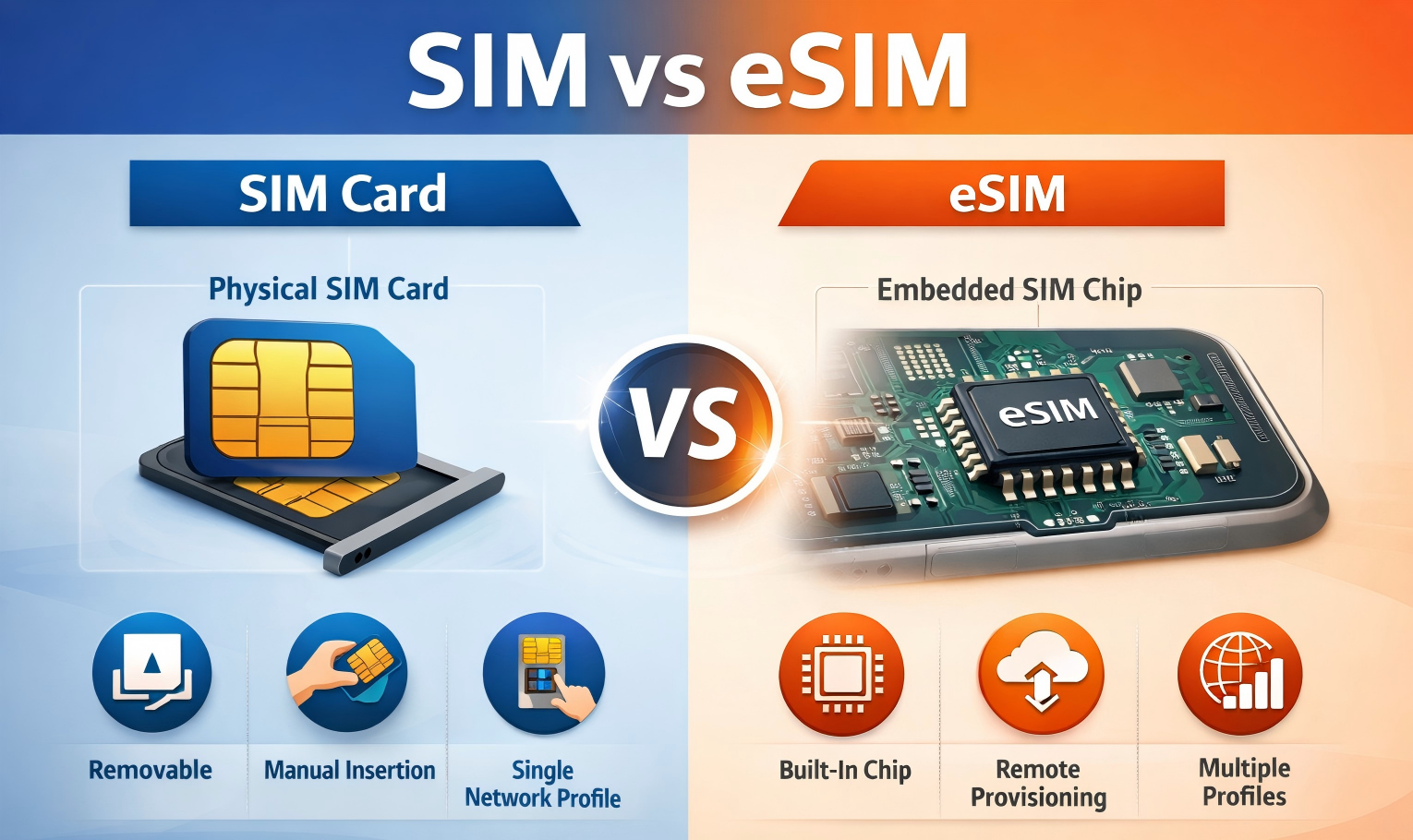
A SIM card (Subscriber Identity Module) is a removable smart card used in mobile devices to store subscriber identity information. It allows devices such as smartphones, tablets, and IoT modules to authenticate with cellular networks.
A traditional SIM card typically contains:
Subscriber identity information
Network authentication data
Secure storage for telecom applications
SIM cards have been the backbone of mobile connectivity for decades, enabling users to easily switch devices by inserting their SIM card into another phone.
An eSIM (Embedded SIM) is a digital SIM technology embedded directly into a device’s hardware. Unlike traditional SIM cards, eSIM does not require a physical card slot. Instead, network profiles can be remotely downloaded and managed over the air.
Key advantages of eSIM technology include:
Remote SIM provisioning
Smaller device design without SIM tray
Easy carrier switching
Ideal for IoT and smart devices
Today, eSIM is widely used in smartphones, smartwatches, connected vehicles, and industrial IoT applications.
The main difference between SIM and eSIM lies in their physical form and management method.
| Feature | SIM | eSIM |
| Form | Physical removable card | Embedded chip |
| Installation | Manual insertion | Remote provisioning |
| Flexibility | Limited to one profile | Multiple profiles supported |
| Application | Traditional mobile devices | IoT, wearables, smart devices |
As global connectivity expands, eSIM technology is becoming an important trend in telecom and IoT industries.
Behind every SIM or eSIM device is a complex personalization and testing process that ensures security, compatibility, and reliable network performance.
Manufacturers and telecom providers require advanced solutions for:
SIM card personalization
eSIM profile provisioning
Smart card IC module testing
Secure chip data programming
Efficient production and testing are essential to guarantee that SIM and eSIM products meet telecom standards.
As a provider of smart card manufacturing and semiconductor testing solutions, PIOTEC delivers advanced equipment for SIM/eSIM personalization and smart card IC module testing.
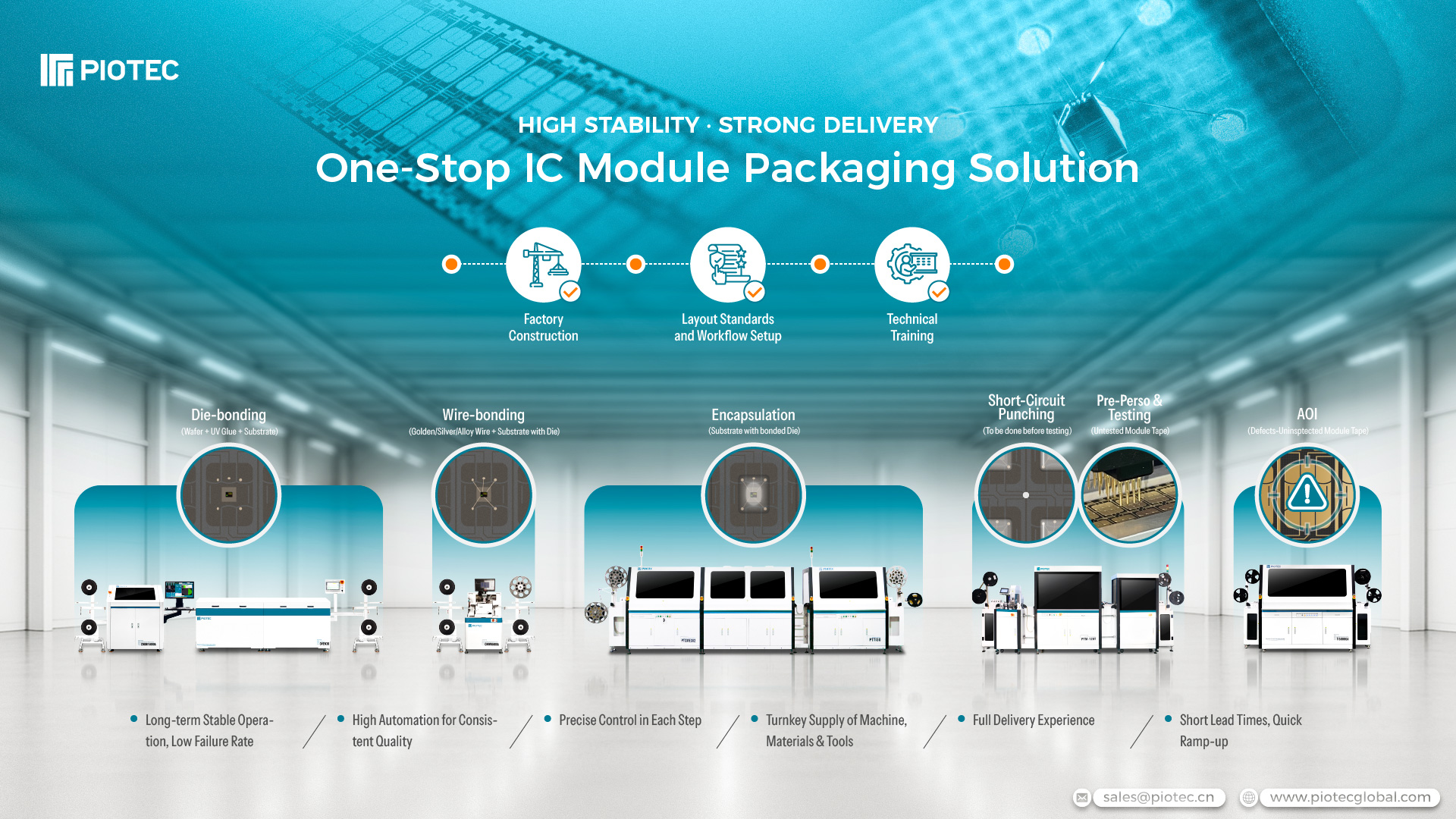
PIOTEC offers:
Flexible SIM & eSIM personalization lines
Smart card IC module testing systems
These solutions help telecom manufacturers build efficient, secure, and scalable smart card production factories, supporting applications in mobile communication, IoT connectivity, and digital identity systems. With years of industry experience and advanced automation technologies, PIOTEC helps customers accelerate SIM and eSIM production while maintaining high security and reliability standards.

Talk to a Card Personalization Expert