In today's digital-first financial landscape, payment security is more critical than ever. At the heart of every chip-enabled bank card lies a carefully engineered process known as EMV card personalization. But what exactly does that mean — and why does it matter for banks, card issuers, and cardholders alike? This guide breaks down the concept, the process, and the technology behind it, while highlighting how leading solutions like Piotec's Bank Card Personalization and Issuing Solution bring it all together.
EMV stands for Europay, Mastercard, and Visa — the three companies that originally developed the global standard for chip-based payment cards. Today, EMV is managed by EMVCo, a consortium that includes major card networks such as American Express, Discover, JCB, and UnionPay.
EMV cards store payment credentials on an embedded microchip, offering significantly stronger protection against fraud compared to traditional magnetic stripe cards. When combined with a PIN or contactless technology, EMV cards form the backbone of modern secure payment infrastructure worldwide.
EMV card personalization is the process of embedding unique, cardholder-specific data onto a payment card to make it functional and secure. This goes far beyond simply printing a name on a card — it involves programming cryptographic keys, account data, and security parameters directly into the card's chip and magnetic stripe.
In essence, personalization transforms a blank card into a fully operational financial instrument tied to a specific account holder. Without this step, the card is just a piece of plastic; with it, the card becomes a secure digital key to a financial account.
Modern card personalization involves multiple technical stages, each serving a distinct security or functional purpose:
· Chip Pre-Personalization: Before physical personalization begins, the EMV chip is initialized with issuer-specific data and cryptographic keys during the pre-personalization phase. This step prepares the chip to accept cardholder-specific data securely.
· Contact IC Writing: Cardholder account data — including the Primary Account Number (PAN), expiry date, service codes, and cryptographic certificates — is written to the contact chip through a physical electrical interface following the ISO/IEC 7816 standard.
· Contactless IC Writing: For dual-interface or contactless-only cards, the same or equivalent data is programmed to the contactless antenna and chip module via ISO/IEC 14443 protocols, enabling tap-to-pay functionality.
· Magnetic Stripe Encoding: Even on chip cards, the magnetic stripe is typically encoded with account data to ensure backward compatibility with legacy terminals that do not yet support EMV chips.
· Flat Printing & Embossing: The cardholder's name, card number, and expiry date are printed or embossed on the card surface for visual identification. Modern systems support flat inkjet printing as well as traditional raised-character embossing.
· Hot Stamping: Security holograms and decorative foil elements are applied via hot stamping to enhance both visual security features and the card's premium aesthetic appeal.
Each EMV card contains a unique set of cryptographic keys and certificates. When a transaction occurs, the card and the terminal engage in a dynamic authentication exchange — the card generates a unique cryptogram for each transaction, making it virtually impossible to clone or replay.
This stands in stark contrast to magnetic stripe cards, where static data can be skimmed and replicated. EMV personalization essentially hard-codes security into the card at the point of manufacture, providing multi-layered fraud protection before the card ever reaches a customer's wallet.
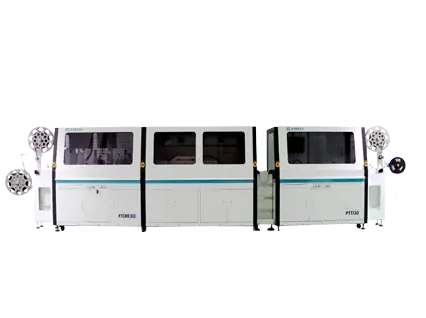
For financial institutions seeking a comprehensive, end-to-end card production system, Piotec's Bank Card Personalization and Issuing Solution delivers exactly that. Designed by Shenyang Piotec Technology Co., Ltd. — a global leader with over one billion chips manufactured — the solution covers every step of the personalization process under one roof.
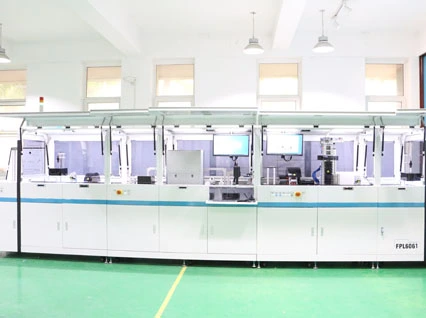
At the core of the solution is the FPL6081, a modular personalization system that supports flexible configuration. Banks and card bureaus can customize the number and type of functional modules to match their specific production requirements — whether issuing standard debit cards, premium credit cards, or dual-interface contactless cards.
Key capabilities include:
· Chip Pre-Personalization: Secure initialization of EMV chips prior to full card personalization.
· Contact & Contactless IC Writing: High-speed data writing for both ISO 7816 contact and ISO 14443 contactless interfaces.
· Magnetic Stripe Encoding: Reliable encoding for tri-track magnetic stripes ensuring global terminal compatibility.
· Embossing & Flat Printing: Precision character embossing and DOD (Drop-on-Demand) inkjet printing for card surface data.
· Hot Stamping: Application of holograms and security foils to meet international card standards.
· Production Management System: Real-time production monitoring, equipment status management, and spare parts control for full traceability.
Explore Piotec's full Bank Card Personalization and Issuing Solution at https://www.piotecglobal.com/bank-card-personalization-and-issuing-solution/ to learn how our modular, scalable systems can streamline your card issuance operations.
Personalization must adhere to strict international standards to ensure interoperability across global payment networks:
• ISO/IEC 7816 — Defines the electrical and communication interfaces for contact chip cards.
• ISO/IEC 14443 — Governs proximity contactless smart card communication.
• EMVCo Specifications — The definitive technical standards for chip payment application data, authentication, and cryptography.
• PCI DSS & PCI Card Production — Security standards governing the physical and logical security of card production facilities.
Compliant personalization systems, such as those offered by Piotec, are designed and certified to meet these requirements, giving issuers confidence in the integrity of every card produced.
The personalization landscape continues to evolve. Trends shaping the industry include:
• Instant Issuance: Branch-level card issuance systems that personalize cards on-demand in minutes, improving customer experience.
• Metal Cards: Premium metal card manufacturing with adapted personalization techniques for laser engraving and embossing.
• Eco-Friendly Materials: Growing demand for cards made from recycled or biodegradable materials, requiring adapted personalization processes.
• IoT & V2X Applications: Beyond payments, EMV-like personalization techniques are now applied to IoT security modules and vehicle-to-everything (V2X) secure elements.
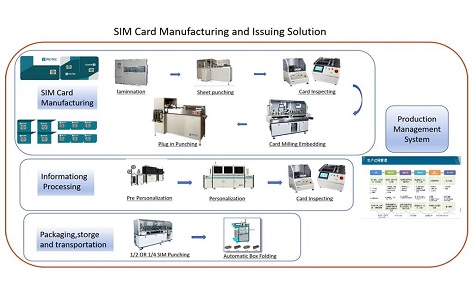
Piotec continues to lead in these areas, offering solutions that span bank card, SIM card, ID card, and IoT chip personalization — all built on a foundation of over two decades of R&D and global deployment experience.
EMV card personalization is the invisible but essential process that makes every chip card secure, functional, and uniquely yours. From cryptographic chip programming to embossing and hologram application, each step is a precision engineering task that demands purpose-built equipment and rigorous quality control.
Whether you are a bank looking to upgrade your card issuance infrastructure or a card bureau seeking more flexible and scalable production systems, partnering with an experienced provider is key. Piotec's Bank Card Personalization and Issuing Solution offers the technology, expertise, and global support to help you issue secure, high-quality EMV cards at scale.
Ready to optimize your card personalization process? Contact Piotec today or visit https://www.piotecglobal.com/ to explore the full product portfolio.

Contact Piotec for Smart Card Solution