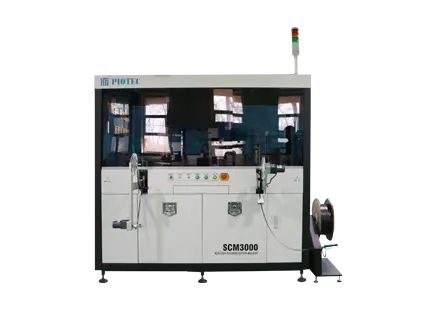
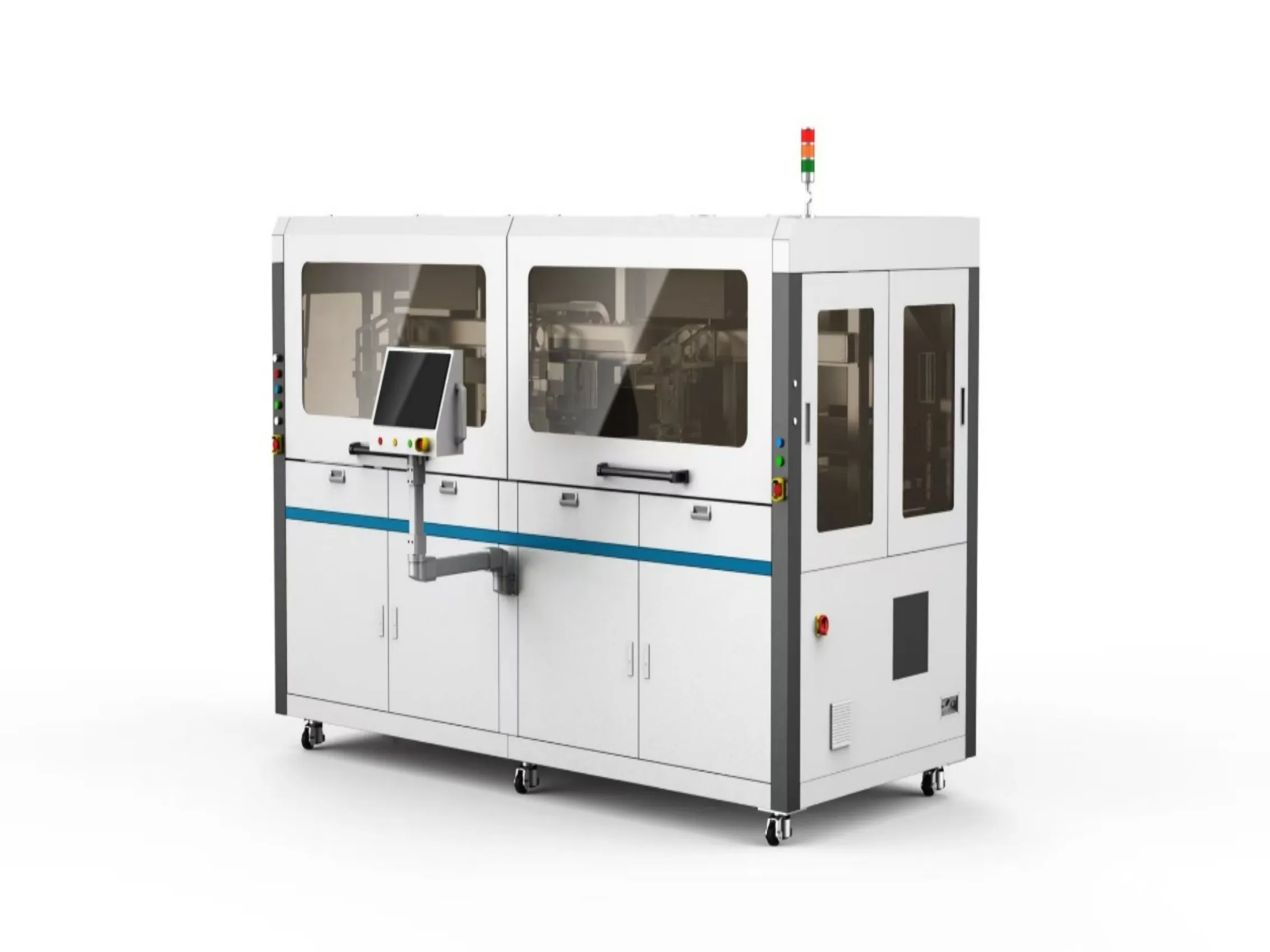
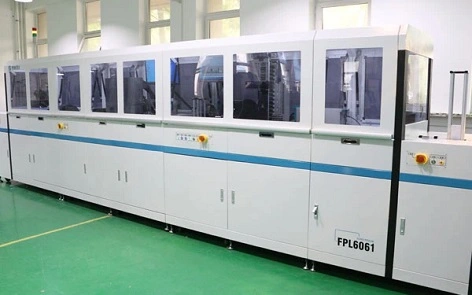
Credit cards are manufactured through an industrial, step-by-step workflow where raw materials are laminated into stable sheets, converted into precise card bodies, finished with foils and security elements, then inspected and tracked until packaging. That is the core credit card manufacturing process, and a credit card manufacturing machine is usually an automated production line that connects these stages into one controlled system.
At PIOTEC, we build fully automated bank card manufacturing solutions designed for high-volume programs where consistency, yield, and traceability matter as much as speed.
In a real factory setting, card production is not a single device that does everything. It is a connected set of modules and stations that move materials forward with minimal manual handling. A modern line typically includes:
Raw material handling for specialized card body materials
Automated sheet stacking and feeding
Lamination to bond multi-layer structures
Hot stamping for foils and security visuals
Die-cutting to separate cards from sheets
Milling and slotting for design-specific structures
Inspection and testing for appearance and card body quality
Production management software for monitoring, traceability, and maintenance
This kind of architecture is built to reduce rework, prevent process drift, and support audited manufacturing environments.
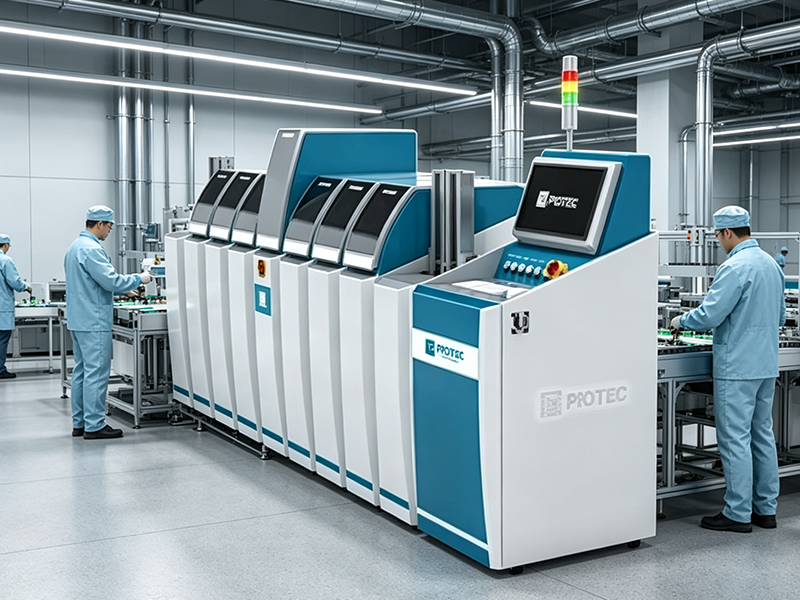
The process begins with purpose-built card body materials engineered for stiffness, dimensional stability, and surface compatibility. Premium programs may also require standing labels with gold foil or specialty metal-effect materials to achieve a distinctive look and stronger anti-counterfeit characteristics. Material consistency is not a minor detail. Variations in thickness, adhesion behavior, or surface energy can show up later as warping, foil defects, or delamination.
Most high-volume production runs in sheet format first. Fully automated sheet stacking improves throughput and helps maintain alignment accuracy across the entire sheet. That alignment becomes critical during stamping and cutting, where even small offsets can create visible defects.
Lamination is where layered materials are bonded into a rigid sheet using controlled heat, pressure, and dwell time. This step defines much of the finished card’s durability and long-term stability.
Hot stamping applies foils and certain security or decorative elements with precise registration. It is widely used for gold and silver finishes, brand accents, and features that are difficult to replicate with basic printing alone.
The best results come from stable control of temperature, pressure, timing, and surface cleanliness. When stamping is integrated into an automated line, it is easier to keep output consistent across large batches.
After lamination and finishing, sheets are die-cut into individual cards. Die-cutting accuracy influences:
final card dimensions
edge smoothness and visual quality
downstream handling and packaging stability
Tight tolerance control at this stage reduces jams, misfeeds, and cosmetic rejects later.
Some card programs require milling and slotting steps. This may support unique structures, packaging requirements, or embedded components. Because milling changes the physical geometry of the card body, it needs stable depth control and repeatable tool performance to avoid weakening the card or causing inconsistency between batches.
High-volume bank card production relies on inspection throughout the line, not just at the end. Common inspection layers include:
Visual inspection of card appearance for scratches, contamination, and registration issues
Full inspection of large-sheet printing materials in programs that demand higher assurance
Random sampling of individual sheets for appearance checks
Dedicated inspection for holographic labels and signature strips
Card body testing to validate physical properties and finishing integrity
This combination helps manufacturers catch defects early, protect yield, and reduce the risk of shipping nonconforming cards.
A production line becomes significantly more valuable when it is connected to a management system that provides real-time visibility and traceability. In practice, this includes:
Unified management of the smart card production workflow
Real-time monitoring of process status, alarms, and throughput
Equipment status tracking and downtime reporting
Spare parts management and maintenance planning
Batch and lot traceability for audits and investigations
For regulated financial programs, traceability is operational protection. It shortens root-cause analysis, limits the scope of rework, and supports compliance reporting.
If you are comparing a credit card manufacturing machine, focus on what protects consistency at scale:
End-to-end automation that reduces manual touchpoints
Stable lamination and stamping controls with repeatable parameters
Inspection depth that matches your risk level, including critical feature checksProduction management that supports traceability, alarms, and maintenance scheduling
Compatibility with specialty materials, including premium foil label processes
At PIOTEC, our approach is to design the line as one coordinated system, so quality, throughput, and monitoring reinforce each other rather than competing.
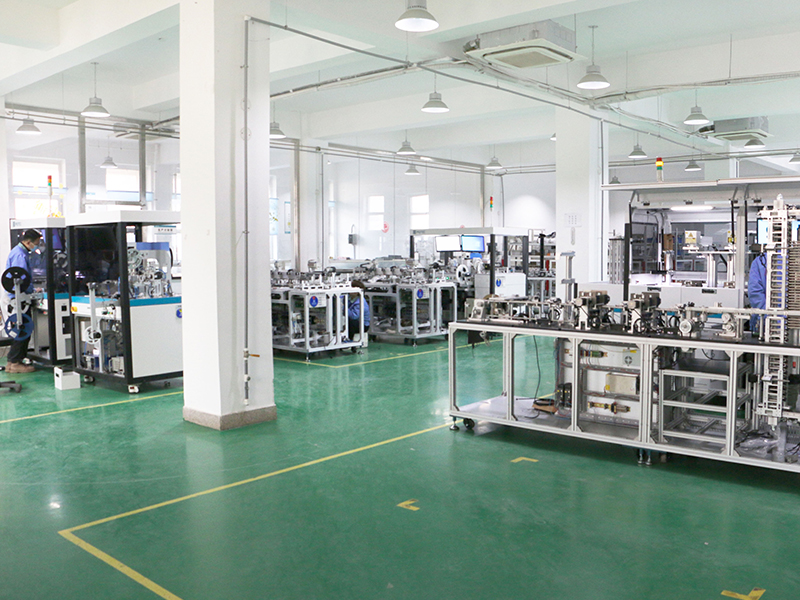
The credit card manufacturing process usually includes raw material preparation, automated sheet stacking, lamination, hot stamping and foil application, die-cutting, milling and slotting when required, inspection and testing, and production management through to packaging.
A credit card manufacturing machine commonly refers to a full production line with lamination, stamping, cutting, inspection, and software-based monitoring and traceability rather than one standalone device.
Inspection helps prevent cosmetic defects, security feature issues, and physical failures from reaching customers. It also protects yield by catching problems early, when rework is cheaper and faster.
Look for real-time monitoring, equipment status visibility, batch traceability, alarm logging, and spare parts and maintenance management. These capabilities reduce downtime and simplify audits.
Yes. With the right hot stamping and label application processes, plus inspection modules to verify registration and appearance, lines can support premium foil elements consistently at scale.

Contact Piotec for Smart Card Solution