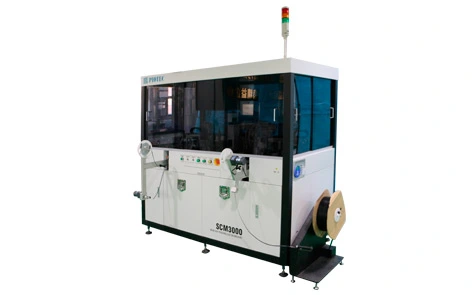
Smart card personalization is no longer just about printing a name on a card. In 2026, banks, telecom operators, government ID programs, and secure credential issuers are looking for faster, more flexible, and more secure systems that can encode chips, verify data, engrave laser marks, print graphics, sort cards, and support multiple card formats in one production environment.
A smart card personalization machine is used to write personalized data into contact, contactless, dual-interface, SIM, banking, social security, and ID cards. Depending on the configuration, it can handle chip encoding, magnetic stripe encoding, laser engraving, DOD inkjet printing, thermal printing, embossing, indenting, topping, optical verification, and final sorting. For card issuers working under standards such as ISO/IEC 7816 for contact cards and ISO/IEC 14443 for proximity cards, machine stability and data accuracy are critical.
Card programs are becoming more fragmented. A bank may need EMV credit cards, debit cards, prepaid cards, and premium metal-look designs. A government bureau may need national ID, social security, or eID cards. A telecom manufacturer may need high-speed SIM personalization with strict data matching requirements.
This is why modular card personalization lines are gaining attention. Instead of buying a fixed system that only supports one process, manufacturers now prefer scalable systems that allow different modules to be added according to production needs.
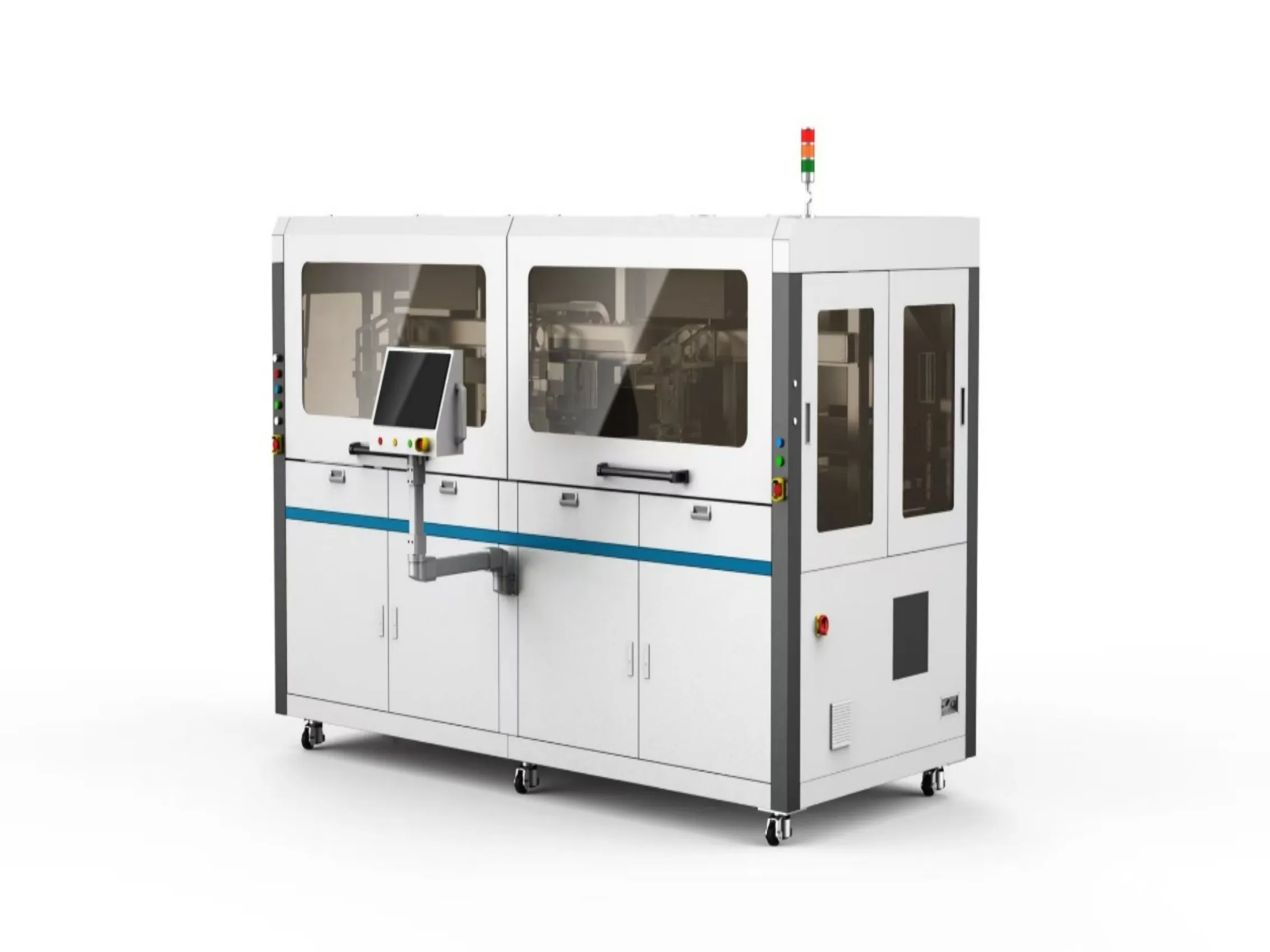
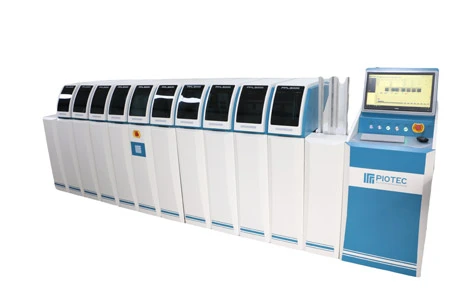
For example, the FPL3000 Banking Card Flexible Perso Line is designed for flexible central issuance. It can be configured with magnetic encoding, contact IC encoding, contactless IC encoding, thermal printing, DOD inkjet, laser engraving, embossing, indenting, topping, and verification modules. This helps issuers adapt to different card designs and order volumes without rebuilding the entire line.
When comparing equipment from a smart card supplier, buyers should look beyond headline speed. Throughput matters, but so do accuracy, uptime, security, and compatibility.
Important features include:
- Contact and contactless IC personalization support
- ISO7816, ISO14443A/B, MIFARE, ISO/IEC 15693, and FeliCa compatibility
- Magnetic stripe encoding for ISO7811 tracks 1, 2, and 3
- Laser engraving for micro-text, QR codes, barcodes, CLI/MLI, Braille, and grayscale images
- DOD inkjet printing with UV curing for durable personalization
- Thermal printing with ribbon breakage detection
- Optical, contact IC, and contactless verification
- Dual input and output magazines for continuous production
- Low-noise and stable operating conditions
For high-volume banking card issuance, the FPL3000 offers up to 300 UPH for magnetic encoding, contact/contactless personalization, and DOD inkjet configurations. Its dual input magazines, each supporting up to 500 cards, help reduce manual intervention during long production runs.
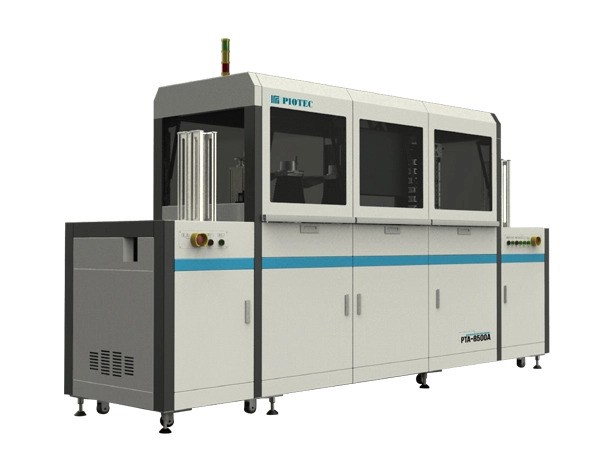
Different card types require different machine architectures. The PTA-8500A SIM card manufacturing machine, for example, has been proven in the market for over eight years, with more than 100 sets delivered. It supports high-speed SIM personalization and is suitable for large telecom card manufacturers.
For banking cards, the FPL3000 is a better fit because it supports more visual and security personalization processes, including embossing, indenting, topping, and high-resolution laser engraving up to 160 DPI. Buyers searching for a **credit card making machine for sale** should pay close attention to whether the system supports EMV-related chip personalization, magnetic encoding, visual verification, and secure data handling.
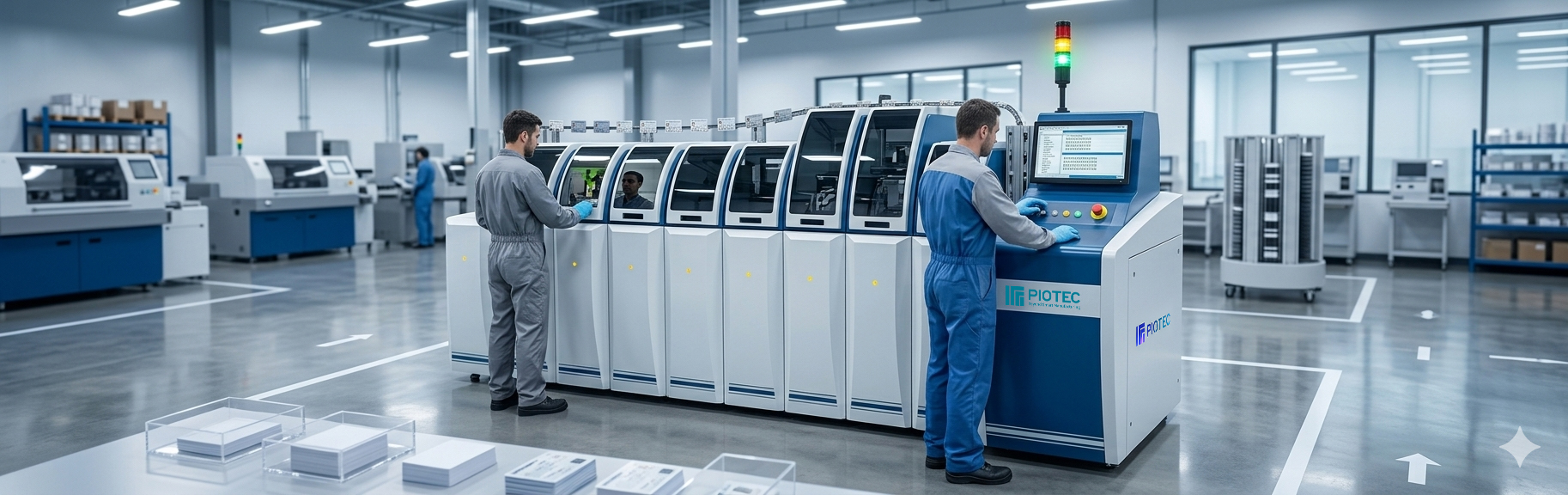
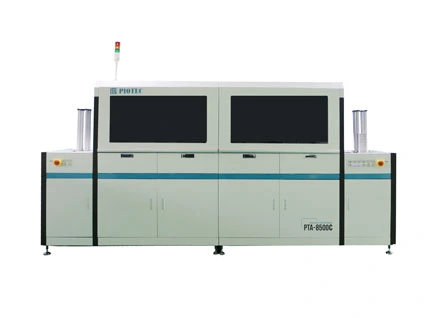
For government and social security card projects, equipment such as the PTA-8500C Social Security Card Personalization Machine can support stable production where accuracy and traceability are essential.
Before choosing a smart card personalization machine in 2026, define your card type, expected volume, security requirements, personalization methods, and future expansion needs. A system for 500,000 cards per year is different from one used for national-level issuance. Also check environmental and facility requirements. For example, many smart card personalization systems operate best around 23°C ±3°C and 50% ±10% humidity. Power supply, compressed air, machine dimensions, and noise level should be reviewed before installation.
The best machine is not always the fastest one. It is the one that matches your production mix, reduces rejects, supports compliance, and gives room for future card program changes.
A smart card personalization machine writes personal data into a smart card chip and may also print, engrave, encode, emboss, verify, and sort the finished card.
Card printing usually refers to visual printing on the card surface. Personalization includes data writing, chip encoding, magnetic encoding, security marking, verification, and sometimes physical finishing.
Yes, if the machine has a modular design. Systems like flexible personalization lines can support banking cards, ID cards, smart cards, and some government credential programs depending on configuration.
It depends on production volume. SIM card lines may require very high throughput, while banking card lines often balance speed with embossing, printing, chip encoding, and verification accuracy.
Verification ensures the chip data, printed information, magnetic encoding, and security marks match correctly. It helps reduce rejects and prevents issuing incorrect or unusable cards.

Talk to a Card Personalization Expert