A chip card can look flawless and still fail at a terminal. The cause may be unstable electrical behavior, incorrect protocol handling, weak contactless communication, damaged card construction, or incomplete personalization data. For manufacturers, chip card testing is therefore not a final inspection task. It must begin during product design and continue through module testing, card assembly, personalization, and production release.
The correct test plan depends on the product. Payment cards, SIM cards, ID cards, transport cards, ePassport components, and M2M chips do not follow exactly the same approval route. Most programs, however, combine ISO/IEC interface standards with application specifications, security requirements, and customer acceptance criteria.
No single standard covers the entire card. Manufacturers normally work with several layers of requirements.
| Standard or Framework | Main Purpose | Manufacturing Relevance |
|---|---|---|
| ISO/IEC 7810 | Physical characteristics of identification cards | Card dimensions, construction, materials, and physical performance |
| ISO/IEC 7816 series | Contact chip card interfaces | Contacts, electrical signals, protocols, commands, files, and data exchange |
| ISO/IEC 14443 series | Contactless proximity communication | RF interface, initialization, anticollision, activation, and transmission |
| ISO/IEC 10373 series | Test methods for cards and interfaces | General, contact, and contactless conformance testing |
| EMV Chip Specifications | Payment-card interoperability | Contact and contactless payment testing and approval |
| GlobalPlatform Card Specification | Secure application management | Application loading, security domains, permissions, and lifecycle control |
| Program Requirements | Issuer- or scheme-specific rules | Personalization profiles, keys, sampling, reporting, and release criteria |
ISO/IEC 7810 defines physical characteristics, while ISO/IEC 10373-1 provides methods for evaluating many of those characteristics. ISO/IEC 7816 addresses the contact interface between a chip card and a reader. For proximity cards, ISO/IEC 14443 defines contactless communication, and ISO/IEC 10373-6 provides related test methods.
Payment products also require EMV evaluation. EMVCo distinguishes Level 1 testing, which covers communication protocols and mechanical, electrical, or RF interfaces, from Level 2 testing, which concerns payment application or kernel logic. For card products, the applicable route depends on the platform, application, scheme, target market, and current approval documents.
GlobalPlatform is relevant when a secure element supports multiple applications or standardized card-content management. Its framework helps define how applications are loaded, installed, personalized, secured, and managed throughout the card lifecycle.
Manufacturers should therefore start with the end application, not only the chip type. Each mandatory requirement must be mapped to design validation, factory testing, external laboratory work, and final customer approval.
For contact cards, production testing should confirm reliable communication under the required operating conditions. Typical checks include pin continuity, open and short circuits, leakage current, current consumption, reset response, communication timing, protocol execution, and command-response behavior.
ISO/IEC 7816-3 covers power, signal structures, voltage and current behavior, transmission mechanisms, and information exchange. ISO/IEC 7816-4 covers command-response pairs, application structures, data objects, and file access. Together, they provide the technical basis for verifying that a card powers up, responds correctly, and exchanges data predictably.
A test should not stop after one successful reset or command. Equipment should also identify intermittent contacts, abnormal current draw, repeated reset failures, slow responses, and incorrect status words. Some faults appear only after module embedding or at high production speed, so testing must be placed at the stages where defects can actually be introduced.
Contactless cards require verification of activation, anticollision, protocol exchange, RF behavior, and communication stability. A card that works with one internal reader may still fail with other devices because of differences in field strength, timing, antenna coupling, or application behavior.
Internal functional testing, qualified conformance tools, and recognized laboratory approval therefore serve different purposes. ISO/IEC 14443 defines the proximity-card interface, while ISO/IEC 10373-6 establishes the related test methods.
Before production begins, the manufacturer should control the test script, chip profile, voltage class, protocol settings, application version, expected response data, and retry policy. Without a fixed configuration, two production lines may test the same card differently and reach inconsistent release decisions.
Electrical compliance alone does not prove that a card is ready for use. The finished product must retain its physical integrity during handling, personalization, transport, and normal service.
Physical evaluation may include dimensions, warpage, bending, torsion, adhesion, peel strength, chemical resistance, temperature exposure, humidity, and durability of printed or embedded elements. Exact tests and limits depend on the applicable product standard and customer program. ISO/IEC 10373 describes test methods, but acceptance criteria may appear in a related standard or project specification.
The relationship between the chip module and card body also matters. Milling, implanting, lamination, and personalization can create cracked connections, contamination, poor adhesion, or mechanical stress. A module that passed before embedding may fail afterward, so sampling should cover both sides of critical manufacturing stages.
Security checks may include secure key loading, authentication, access permissions, lifecycle-state control, cryptographic operations, and validation of personalized data. These activities require controlled user access, audit trails, segregation of duties, and approved key-management procedures. Interface compliance alone does not prove that personalization is secure.
A practical production workflow can be divided into four main stages:
Incoming validation: Confirm chip or module identity, configuration, and basic electrical function.
In-process testing: Check products after embedding, lamination, or other risk-sensitive operations.
Personalization verification: Confirm that files, applications, data, keys, and lifecycle states were written correctly.
Final release: Complete functional checks, visual inspection, traceability review, and required sampling.
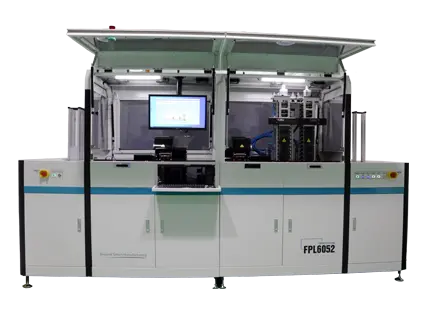
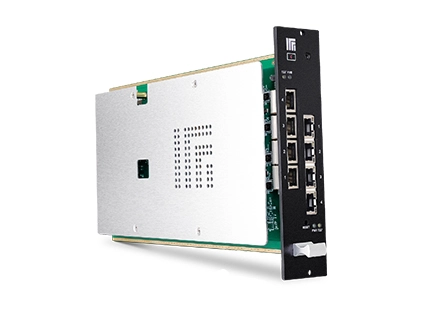
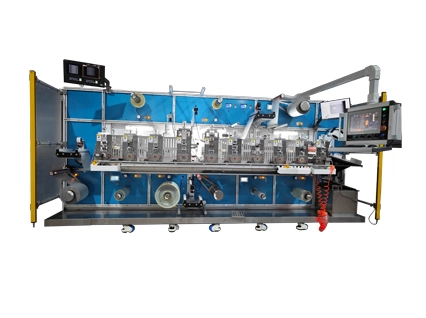
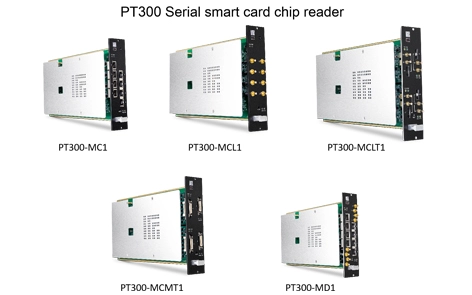
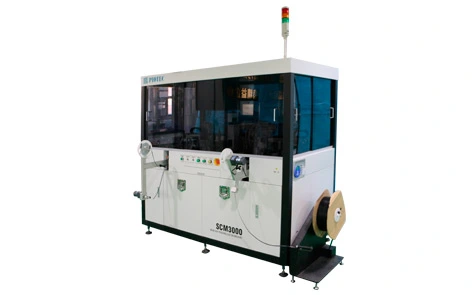
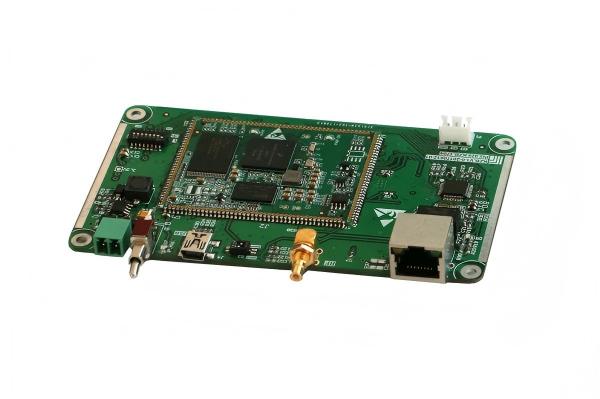
PIOTEC provides equipment for smart card manufacturing, personalization, and testing. Its solutions support contact cards, contactless cards, modules, and semiconductor chips, with functions such as T=0 and T=1 protocol support, open and short circuit checks, leakage-current testing, and current-consumption testing.
Manufacturers planning an integrated production workflow can explore PIOTEC's smart card manufacturing and personalization equipment to evaluate solutions for writing, testing, personalization, and production control.
The selected equipment should match the card profile and factory workflow. Important considerations include supported interfaces, voltage classes, parallel test capacity, system integration, result storage, and failure analysis. A clear requirement specification prevents unnecessary complexity while ensuring that mandatory testing functions are available.
Chip card testing is not one universal test performed at the end of production. It is a structured compliance process based on the card's physical format, communication interface, application, security model, and target market.
ISO/IEC 7810, ISO/IEC 7816, ISO/IEC 14443, and ISO/IEC 10373 form the main technical foundation. EMVCo requirements address payment interoperability and approval, while GlobalPlatform may govern secure application and lifecycle management. Issuers, payment schemes, telecom operators, and government programs can add further rules.
Manufacturers should convert these requirements into controlled test scripts, defined pass-and-fail criteria, calibrated equipment, traceable records, and clear escalation procedures.
If you are planning a new smart card manufacturing or personalization line, PIOTEC can help evaluate the required testing functions according to your chip platform, application, throughput, and compliance requirements. Contact PIOTEC to discuss your project and suitable equipment configuration.
The ISO/IEC 7816 series is the main international framework for contact integrated circuit cards, covering electrical signals, protocols, commands, and data organization.
ISO/IEC 14443 is widely used for proximity contactless cards. Related conformance test methods are defined in ISO/IEC 10373-6.
No. ISO conformance supports interface compliance, but EMV approval follows separate EMVCo processes and may also require scheme or issuer validation.
It depends on customer rules, risk, throughput, and process capability. Critical electrical and personalization checks are often performed on every unit, while physical and environmental tests may use controlled sampling.

Contact Piotec for Smart Card Solution